Showing posts with label Travel. Show all posts

Get fit this summer -- at Rizal Park

Who is his right mind would go to Rizal Park this summer?


The concrete esplanade is a giant frying pan. Winds are on vacation. And Rizal’s very bones must be sizzling inside their kiln — er — monument.

But I disagree.

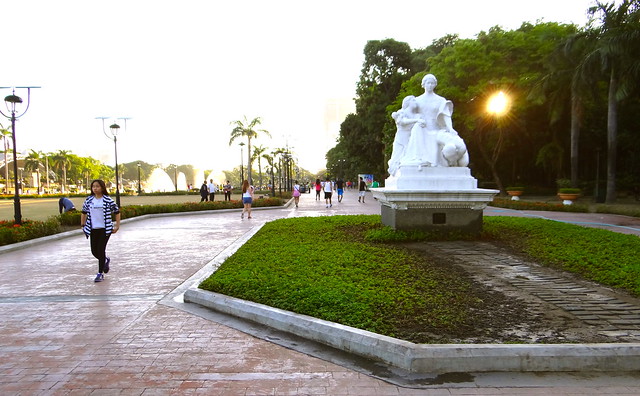
Typical morning at Rizal Park

Rizal Park is among the best places you can visit this season(!) — especially if you’re into fitness. Just be at the park by sunrise. You’ll be amazed at how the place can awaken with life, music, and colors as fitness enthusiasts of all types converge in the area. Here are some of what you -- dear accountants and iCPA friends -- can do when you’re there:

1. RUN


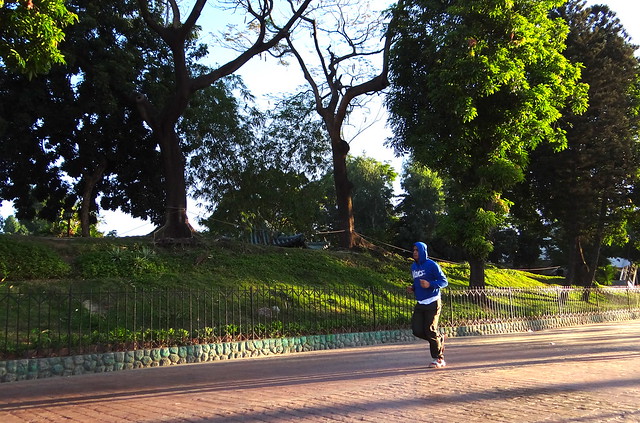
The distance around the park and the Quirino Grandstand is about 3 km! So it’s easy to track your progress. No wonder the place has become a favorite among runners casual and pro. And since it’s still early in the morning, you need not worry about vehicle smoke. Besides, the upbeat, wake-me-up music playing at the park’s central fountain will be your loudest cheerer.

Puuuush!


2. JOIN AN AERO-MARATHON SESSION


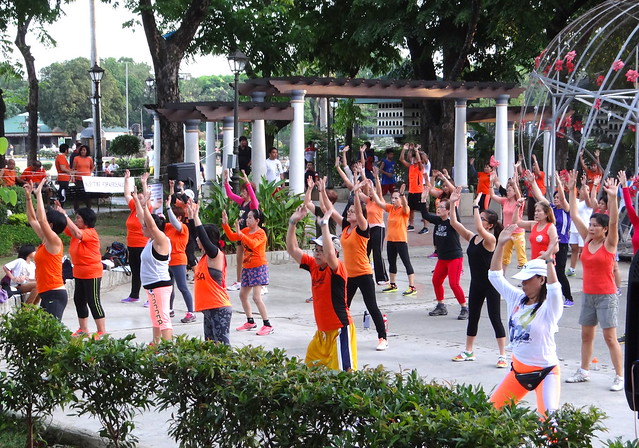
Not the running type? Another option can be the aerobics “marathon” held around 6 am at the park’s “pocket court” beside the National Library; or the one at the Quirino Grandstand, between the carabao statues along Roxas Boulevard. People there are hyper, singing “let’s get loud” along with JLo.

Raise the roof!

3. MIMIC TAI CHI MASTERS


Somewhere near the Inang Bayan statue on the south side of the park is a group of tai chi enthusiasts. Some of them are Chinoy senior citizens. Their moves have always captivated me. Reminds you of Kung Fu Hustle in slow motion. And, yes, you’re free to imitate them! They won’t kick you out. And if they do, it’ll be in painless slow-mo.

Too bad, the tai chi peeps were already done when I arrived.

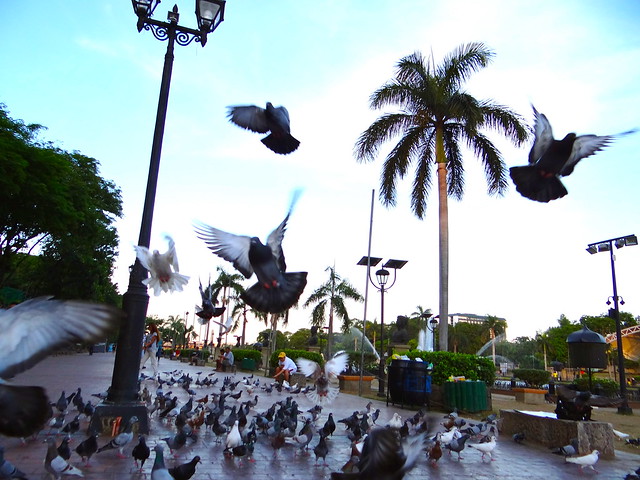
And when you’re too tired to do any of the above, you always can feed the pigeons near the Maria Orosa St. part of the park. Feed them — or chase them.

Rizal Park on a Monday morning
Skyline pigeons
Text and photos: Daryl Zamora

Forget the beach: Remember the past at the National Museum

And so we’re back with more destinations where accountants and iCPA fans can actually enjoy the summer as if in a sparsely-populated beach (a mythical place while summer lasts).

Today we recommend...the National Museum!


The National Museum | Photo from the Official Gazette

With excellent air conditioning system, awesome lighting, and exhibits that will leave you starstruck (“I used to read about Juan Luna’s Spoliarium in high school -- and now it’s right in front of me! Am I dreaming? AM -- I -- DREAMING?”), the Museum is definitely a must-see.

The Museum’s facade feels like a stage, because it is a stage of sorts: in 1935 Manuel Quezon was sworn in here as the President of the Commonwealth in front of hundreds of Filipinos and some American colonists. Other important state events were also held here.

At that time, the building was called the Legislative Building. The upper floors housed the Senate, while the lower ones the House of Representatives.


What used to be the Senate session hall | Photo by the foodietraveller

But the building was almost levelled to the ground during World War II. Heavy shelling destroyed its ceilings and walls; it was nearly impossible to rebuild it. But the government did rebuild it, thank God. It returned to being Legislative Building, until the House of Representatives moved to its new site in Quezon City in 1977 and the Senate to Pasay City in 1996.


The Old Legislative Building (now the National Museum) was bombed during the Battle of Manila, 1945 | Photo from the Official Gazette

Oh, about the Museum.

Its obra maestra is, of course, Juan Luna’s Spoliarium, which is located in the old session hall of the House of Representatives. It is HUGE -- four-by-seven meters. I once thought it’s something hung on a wall. You’ll need to stand a few feet from it to get a decent, capture-the-entire-thing selfie.


Juan Luna’s Spoliarium | Screengrab of photo by Kristine

There’s also a gallery of old religious artifacts from different parts of the country. Mostly you’ll find intricately yet coarsely sculptured santos and altarpieces. The gallery is a beautiful look at how native Filipinos adopted Christianity and expressed their faith through art.


Santos and retablos | Photo by the Weekend Sightseer

As for paintings -- you’ll swoon and drown. Lunas, Resurreccion Hidalgos, Franciscos, Edadeses, Lorenzos, Manansalas, de la Rosas, Amorsolos, and Zobels. You’ll see them hung dignified in various galleries.


Botong Francisco’s Progress of Medicine in the Philippines | Image by Pammy

And, of course, sculptures of various materials and subjects by some of the greatest Filipino sculptors, among them Tolentino, Tampinco, Abueva, and no less than Jose Rizal!


Jose Rizal’s Mother’s Revenge | Photo by Rouella Christina

You think museum-lounging is boring? Think again.

And entrance is free on Sundays. ;) Learn more about the National Museum here.

- Daryl Zamora

Ditch the beach: Summer-stroll around Intramuros

Summer equals beach, right?


Until you enter the resort and can’t see the sand anymore because of the crowd.

But there are other places and activities that can replace your usual summer beach parties. You’d be surprised they might even be better.

This article starts a series of unusual, if not counterintuitive, destinations to fill your summer with grand memories. Let’s start with...

Taking a long walk around Intramuros.


Intendencia Ruins | Photo by Allan Jay Quesada on Wikipedia

It’s the oldest and most historic district in Metro Manila. Latin for “within walls”, Intramuros is the walled original city of Manila. It was here where the datus and rajahs of Manila used to live -- and were defeated by Spanish forces led by Miguel Lopez de Legazpi in 1571. The two camps created a peace pact, and Manila became the capital of Spain’s colony in Asia.

Intramuros and environs

Intramuros then continued to hold a primary role in shaping Philippine history. It was the home-district of Spanish governor-generals and various religious institutions. It housed some of the best colleges in colonial times, including the University of Santo Tomas and the Ateneo de Manila -- schools where national hero Jose Rizal used to study. And in 1945, Intramuros became ‘ground zero’ of the second-worst devastation of a city during World War II; the Battle of Manila, as it was called (between the Japanese and the American and Filipino troops), killed over 100,000 civilians within and around Intramuros. Although Intramuros lost most of its buildings during the war, many of them have been reconstructed and restored for posterity’s sake.

World War II totals Intramuros | Photo on public domain

Your visit to Intramuros could look like this:


As you walk along the walled city’s old streets, your imagination fires up: the horse-drawn carriage just might carry pretty girls in baro’t saya or handsome young mestizos with canes -- whichever you want.

You visit San Agustin Church. It’s not exactly impressive on the outside, but it has breathtaking interiors. The church’s ceiling is rendered in golden beige, chocolate, and cappuccino with intricate, 3D-effect patterns. It is one of the two churches that still stand among Intramuros’ seven pre-war churches (the other is the Manila Cathedral-Basilica).

Inside San Agustin Church | Photo by Shubert Ciencia on Flickr

Tired, you cross the street from San Agustin Church and enter Ristorante delle Mitre, a quaint restaurant with a Filipino-Spanish-Italian mix of a menu. The ambience is perfect during the mid-afternoon blaze; this one’s a real oasis. You might also want to make mano to the bishops who sometimes visit the resto to have lunch with guests. Or, if you have more time, maybe even go online and visit iCPA. ;)

Ristorante delle Mitre | Screengrab of photo by JM Morato on Flickr

Just two blocks away from the restaurant is the Manila Cathedral-Basilica. Did you know it suffered total destruction (by earthquake, fire, and war) several times? But now you can’t find a trace of that wreck. The basilica is simply majestic. And three popes have already held Masses in it: Paul VI, John Paul II, and Francis (just a few months ago).

Manila Cathedral-Basilica | Photo by Eric James Sarmiento on Flickr

Finally, you can end your walk with a romantic sunset stroll in Fort Santiago. It’s the site of Rizal’s imprisonment just before his execution in 1896. The route which Rizal took from his prison cell to the execution area (in Luneta) is even marked by black metallic ‘footprints’. The fort also has a beautiful view of Pasig River and Manila Bay as you watch the sun plunge into the sea.

Ironically, you still end your visit on the beach -- sort of.

Fort Santiago | Photo by Fechi Fajardo on Flickr

- Daryl Zamora